

Implant divergence: from surgical limitation to prosthetic solution
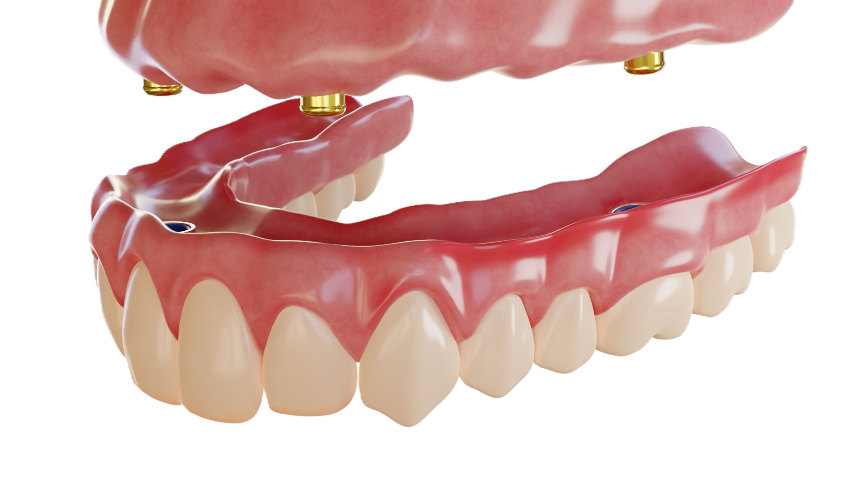
Implant-supported overdentures are a widely used treatment option for improving the retention and stability of removable prostheses in edentulous patients. However, achieving a predictable outcome depends on more than simply the number of implants placed or the retention system selected.
Implant position and angulation also influence how the retention system functions and determine the prosthetic path of insertion.
In clinical practice, however, perfectly parallel implant placement is not always achievable.
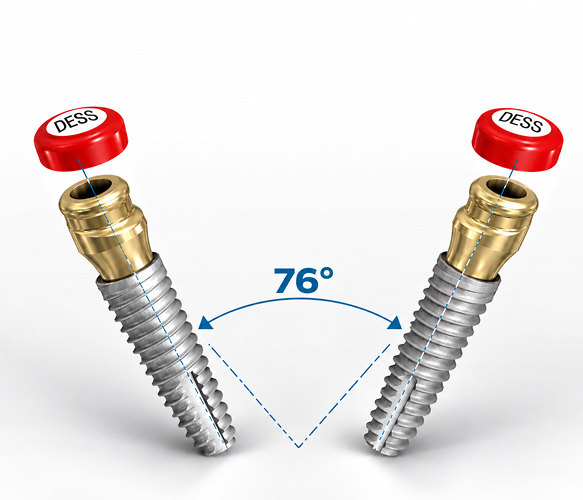
Bone availability, patient anatomy and the proximity of anatomical structures may dictate implant positioning and result in varying degrees of divergence. When this happens, what begins as a surgical limitation can also become a prosthetic challenge.
So, what happens when implants do not share a favourable prosthetic axis?
Why does implant divergence matter?
In an overdenture, the retentive components are repeatedly engaged and disengaged every time the prosthesis is inserted and removed.
When implants are positioned at different angulations, those components no longer function along a common path of insertion. This can alter the forces required to seat and remove the overdenture and may influence the behaviour of the retentive components over time.
Experimental evidence has shown that implant angulation can affect the retention of overdenture attachment systems, particularly when combined with repeated insertion-removal cycles. [1]
A study published in The Journal of Prosthetic Dentistry in 2025 evaluated different retention systems under varying implant angulations and repeated cycles of use. The findings confirmed that both attachment design and implant angulation influence retentive behaviour. [1]
Implant parallelism, therefore, is more than a geometric consideration.
Angulation can directly affect how the retention system performs.
Retention: more is not always better
When discussing overdentures, it is easy to assume that greater retention automatically means a better clinical result.
But maximum retention should not be the goal.
The prosthesis must provide enough retention during function while still allowing the patient to insert and remove it in a controlled and manageable way. At the same time, retentive components are subject to wear and will require maintenance throughout the life of the restoration.
A systematic review and meta-analysis published in 2025 reported that the choice of retention system can influence outcomes such as prosthetic maintenance, tissue response and patient satisfaction, while no single option proved superior across every clinical parameter. [2]
This reinforces an important principle:
The objective is not simply to retain the prosthesis, but to achieve the right balance between retention, function, path of insertion and long-term maintenance.
Managing divergence prosthetically
Surgical planning should always aim to place implants in positions that support the intended prosthetic restoration. However, anatomy does not always allow ideal implant parallelism.
When divergence is present, one option is to compensate for the angular discrepancy at the prosthetic level in order to establish a more favourable path of insertion.
Correcting the prosthetic axis changes the relationship between the retentive components and the direction in which the overdenture is inserted and removed. This may improve their behaviour during repeated insertion-removal cycles.
An experimental study comparing different degrees of implant divergence showed that the use of angulated abutments to compensate for implant angulation helped maintain more stable retentive behaviour after repeated cycles of insertion and removal. [4]
At this point, the way we frame the problem changes slightly.
The question is no longer:
“Can we make every implant perfectly parallel?”
Instead, it becomes:
“How can we create a favourable prosthetic path of insertion when the implants are not parallel?”
Angled DESSLoc®: restoring a more favourable prosthetic axis
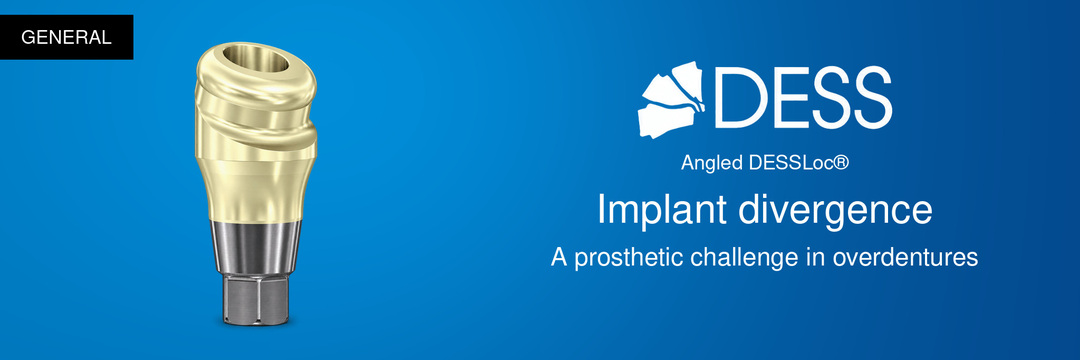
This is precisely the type of clinical situation for which Angled DESSLoc® was designed.
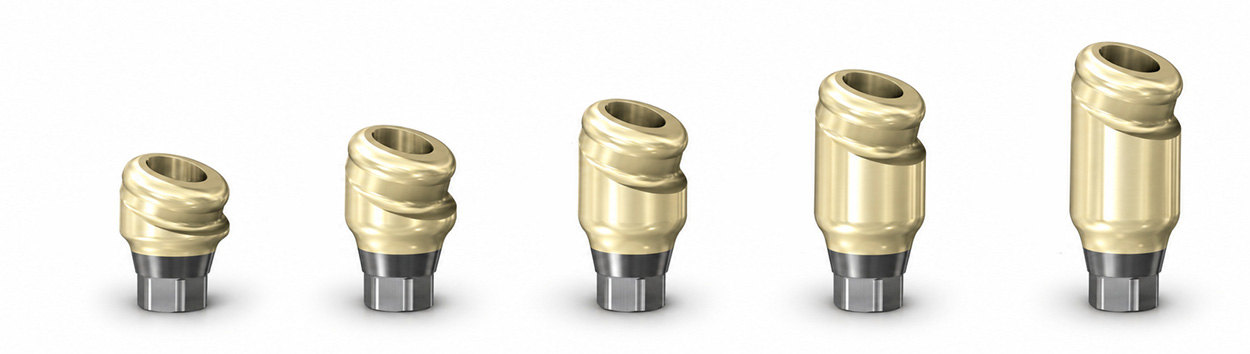
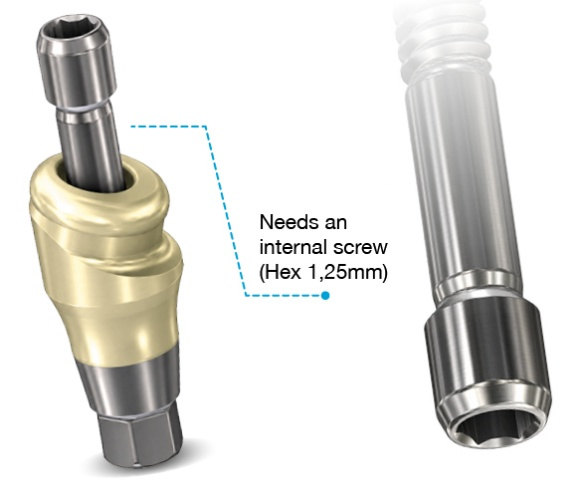
Angled DESSLoc® incorporates an 18° angulation and, when combined with DESSLoc® 40° extended-range retention inserts, allows compensation of up to 76° of divergence between implants.
The aim is to establish a more favourable path of insertion when implant position limits the use of a straight overdenture abutment.
This can broaden the restorative options available in cases where bone availability or the proximity of anatomical structures has dictated implant positioning.
Angled DESSLoc® is secured to the implant using a 1.25 mm hexagonal-head screw, which is always included in the blister.
However, angular correction does not depend on the abutment alone.
The retention insert is also part of the correction
As implant divergence increases, the demands placed on the retentive component also change.
For this reason, Angled DESSLoc® must be used with the DESSLoc® 40° extended-range retention inserts — red, orange and green — which are available in different retention levels. DESSLoc® 20° retention inserts are not indicated for use with Angled DESSLoc® abutments.
This allows the clinician to select the appropriate retention level according to the prosthetic requirements of the case while simultaneously compensating for the angular discrepancy between implants.
Angled DESSLoc® is also available in gingival heights from 1 to 5 mm, allowing the transmucosal height to be selected according to the peri-implant soft-tissue conditions.

Thinking beyond initial retention
Implant divergence is not the only factor to consider in an overdenture rehabilitation.
Retention components are exposed every day to functional loading and repeated insertion-removal cycles. Over time, the behaviour of the materials and surfaces therefore becomes increasingly relevant.
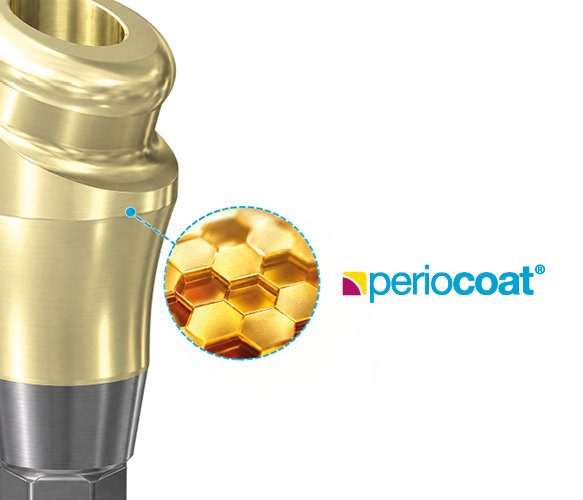
DESSLoc® and Angled DESSLoc® feature Periocoat®, a zirconium nitride (ZrN) coating applied to the abutment. According to DESS® technical documentation, the coating increases resistance to wear and corrosion while also helping to reduce biofilm and bacterial plaque adhesion.
Even with surfaces designed to improve wear resistance and facilitate maintenance, regular clinical reviews and replacement of the retention inserts when required remain essential to preserve overdenture performance over time.
From implant position to restorative workflow
Rehabilitating an overdenture on divergent implants does not depend solely on selecting the appropriate retention system.
The three-dimensional position of the implants and the intended prosthetic axis must also be transferred accurately throughout the restorative process, whether a conventional or digital workflow is used.
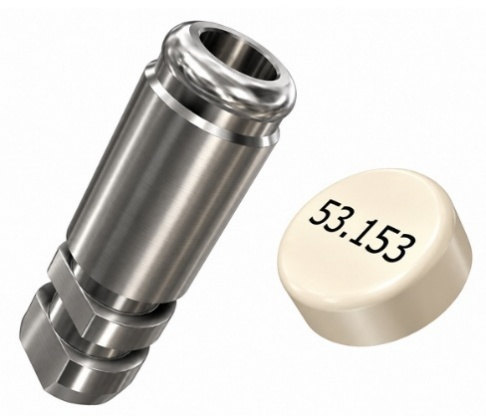
Angled DESSLoc® is supported by a scan abutment and CAD libraries for Exocad® and 3Shape®, allowing the solution to be integrated into established digital workflows and facilitating communication between the clinic and the dental laboratory.
This becomes particularly relevant in cases involving significant implant divergence, where an accurate understanding of implant position is an essential part of restorative planning.
From divergence to restorative control
Treatment planning should always aim for implant positions that are favourable for the intended prosthetic restoration. Nevertheless, anatomical conditions do not always allow ideal parallelism to be achieved.
In these situations, implant divergence does not necessarily have to become a restorative limitation.
Prosthetic components capable of compensating for an unfavourable implant axis can broaden treatment possibilities and help establish a more favourable path of insertion for the overdenture.
Angled DESSLoc® has been designed specifically for these situations, providing an alternative when implant position limits the use of a straight solution.
Managing divergence prosthetically is not simply about adapting to the problem. It is about regaining control of the restoration.
References
1. Effect of different implant angulations and insertion-removal cycles on the retentive force of zirconia and coated titanium denture attachments: An in vitro study. J Prosthet Dent. 2025;134(6):2426.e1-2426.e8. doi:10.1016/j.prosdent.2025.08.010.
2. Patel S, Vaishnav K. Comparative Evaluation of Various Implant Overdenture Attachment Systems in Terms of Survival Rate, Tissue Response, and Patient Satisfaction: A Systematic Review and Meta-Analysis. Cureus. 2025;17(5). doi:10.7759/cureus.83838.
3. Retention of telescopic versus LOCATOR attachments and marginal bone loss surrounding implant-retained maxillary overdentures: A 2-year randomized clinical trial. J Prosthet Dent. 2026;135(4):778-786. doi:10.1016/j.prosdent.2025.05.036.
4. Effect of implant angulation and patrice on the retention of overdenture attachment systems: An in vitro study. J Prosthodont. 2023. The study compared implants with 0°, 15° and 30° divergence and also evaluated angulated abutments used to compensate for the angular discrepancy.



Dra. Patricia Isaac is a dentist and specialist in Oral Rehabilitation at DESS® and is part of our technical support department. She assists and supports our customers with technical issues about products, dental implants and prosthetic abutments, among others.
-
Implant divergence: from surgical limitation to prosthetic solution
October 19, 2026
-
Titanium in Implantology: A Scientific Perspective
 September 15, 2026
-
Scan Bodies for Dental Implants: Common Errors That Affect Restoration Accuracy
 August 28, 2026
-
Peri-Implant Soft Tissue and the Long-Term Success of Implant-Supported Restorations
August 21, 2026
-
Transepithelial abutments: DESS® solutions for screw-retained implant restorations
 July 29, 2026