

SelectGrip®: Understanding surface optimization in cemented implant restorations

The long-term success of cemented implant restorations depends on multiple variables, including prosthetic design, restorative material, cement selection, and clinical protocol. Among these factors, the characteristics of the cementation surface between the restoration and the titanium bonding component significantly influence the retention performance of cemented implant restorations.
To address this aspect, DESS® developed SELECTGrip®, a patented surface treatment introduced in 2009 and incorporated into all DESS® Ti-Base components. The treatment is applied during manufacturing through a controlled airborne particle abrasion process restricted exclusively to the cementation zone, creating standardized surface conditions optimized for cement retention.
Understanding the evolution of cementation surface design helps explain the rationale behind controlled surface treatments such as SelectGrip®.

From geometric retention to surface optimization
Early CAD/CAM implant restorations relied primarily on geometric retention generated by abutment design. Tapered configurations facilitated restoration insertion but inherently reduced resistance form, particularly in situations with limited abutment height.
Subsequent mechanical analyses demonstrated that parallel-wall configurations significantly improved retention by increasing frictional resistance and improving stress distribution along the cement layer. Once adequate wall parallelism and minimal height were achieved, however, further geometric modifications provided limited additional improvements in retention.
As a result, research attention progressively shifted from macroscopic geometry toward surface characteristics capable of enhancing the interaction between luting agents and titanium surfaces.
Surface roughness and micromechanical retention
Adhesive retention in implant prosthodontics relies on micromechanical interlocking between the luting agent and the metallic surface of the abutment. Surface topography therefore plays a key role in the stability of cement-retained restorations.
Surface roughness is commonly quantified using the parameter Ra, which represents the average deviation of the surface profile from its mean line. Moderate roughness values increase the available bonding area and promote mechanical interlocking between cement and substrate.
For this reason, airborne particle abrasion with aluminum oxide has become a widely used laboratory procedure to modify abutment surfaces prior to cementation.
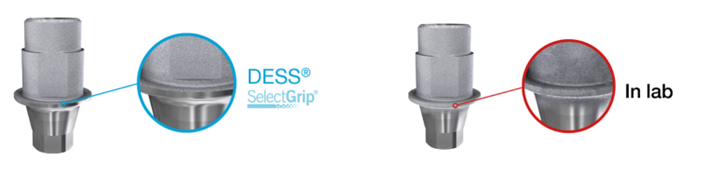
However, when this procedure is performed manually, the resulting surface characteristics may vary depending on operator technique, blasting pressure, particle size, and exposure time, potentially leading to inconsistent bonding conditions between restorations.
Controlled surface treatment during manufacturing
An alternative approach is to incorporate the surface treatment directly during component manufacturing under controlled industrial parameters.
Within this concept, SelectGrip® is applied exclusively to the cementation zone of DESS® Ti-Bases, generating a defined surface roughness optimized for cement retention while preserving the precision of the remaining component surfaces.
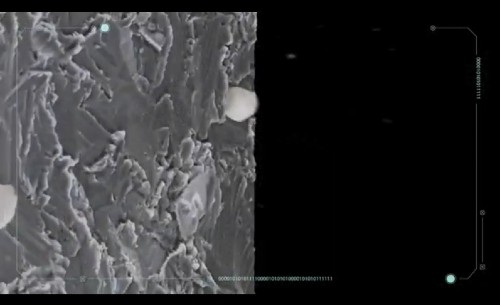
The treated surface presents a controlled roughness value (Ra > 0.8 µm), a range frequently associated in the literature with improved mechanical retention of luting agents on titanium substrates.
By industrializing this step, the surface characteristics become standardized and the need for manual sandblasting prior to cementation can be eliminated.
Mechanical validation of controlled surface treatment
To evaluate the impact of controlled surface treatment, an internal evaluation compared the retention of cemented restorations using Ti-Bases treated with SelectGrip® and identical components without surface treatment.
Two groups of ten samples were tested under standardized cementation conditions. After crown cementation, tensile testing was performed to measure the force required to induce restoration debonding.
The results showed consistently higher retention values in the SelectGrip® group, confirming the positive effect of controlled surface roughness on cement retention.
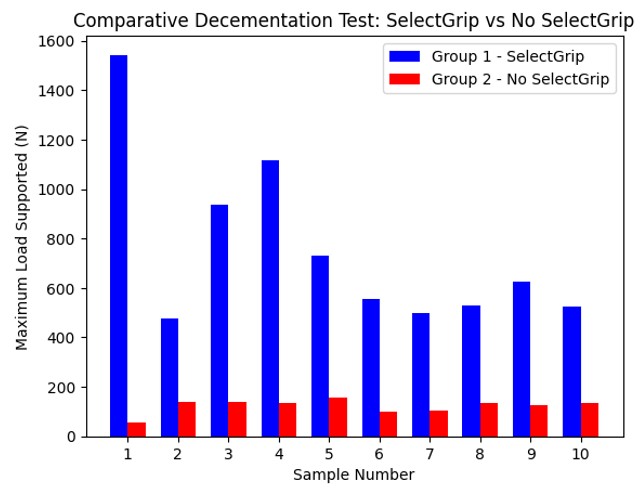
Beyond the increase in absolute retention values, the results also highlight the importance of surface consistency. When roughness is generated during manufacturing rather than manually in the laboratory, variability between restorations can be significantly reduced.
Clinical implications beyond retention values
Manufacturing-stage surface optimization also simplifies the restorative workflow. Because the treatment is applied during production, clinicians and technicians receive components that are already prepared for cementation.
As a result, DESS® Ti Bases incorporating SelectGrip® provide standardized bonding conditions from the moment the component is delivered, reducing laboratory variability and improving the reproducibility of cementation procedures within digital prosthetic workflows.
SelectGrip® as a result of prosthetic evolution
This approach reflects the DESS® commitment to integrating clinically relevant procedures directly into component manufacturing, transforming traditionally technique-sensitive laboratory steps into controlled production parameters.
By standardizing the surface conditions involved in cementation, SelectGrip® contributes to more reliable retention and supports predictable long-term performance of implant restorations, while providing this optimization as an added value without additional cost for clinicians or laboratories.
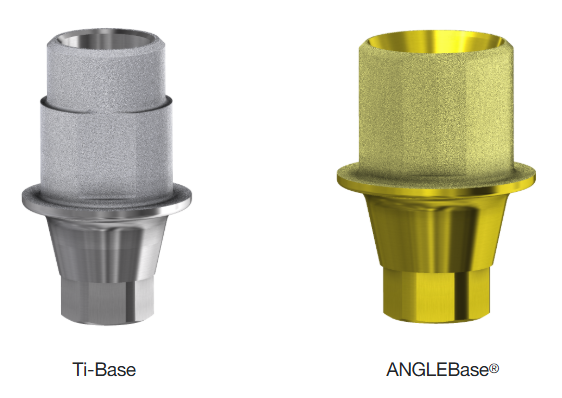
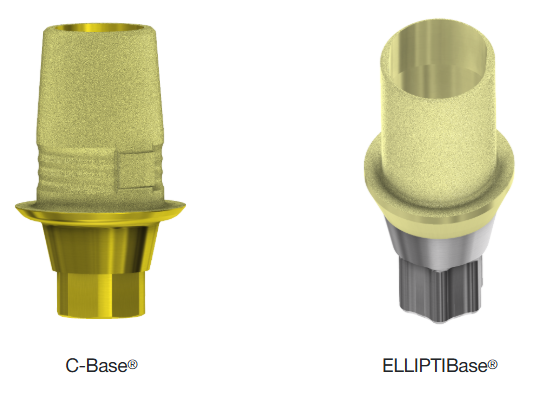
Discover the full range of DESS® components featuring SELECTGrip® Surface Technology on our online store and explore our full range of products.
Need more information? Our team is here to help. Call us at +34 93 719 8995 or email us at [email protected] — we’ll be happy to assist you.



David Cuervo ist ein Spezialist für Zahnprothetik bei DESS Dental, als Teil unserer Abteilung für technischen Support sind er und Oriol für die Kundenbetreuung zuständig.

-
SelectGrip®: Understanding surface optimization in cemented implant restorations
March 10, 2026
-
28 February: raising awareness of Fanconi Anaemia also means caring for oral health
 February 26, 2026
 -
DESS® and LAF Salone: Second year of collaboration for oral health in Sierra Leone
 February 25, 2026
 -
DESS® donates €10,000 to the Family Support Programme at Sant Joan de Déu Hospital
 February 2, 2026
 -
DESS® Fiduciary Markers for Distributors: Benefits, Formats and Key Selling Points
 December 10, 2025