

KOL Interview: Deni Pavlović on Digital Workflows & Predictable Implant Restorations
Deni Pavlović (DeniDent Dental Lab, Belgrade)
Digital dentistry has transformed how implant restorations are designed, produced and delivered — but predictability still depends on fundamentals: protocols, materials, fit and collaboration.
In this first interview of our Lab & CAD/CAM KOL series, we speak with Deni Pavlović, dental technician, lab owner and CAD/CAM specialist, about what truly drives predictable outcomes in implant prosthetics and where digital workflows can still fail if basics are compromised.
Key takeaways
- For full-arch cases, material choice and reducing interfaces are critical for long-term stability.
- Digital workflows work best when paired with strict protocol adherence and proven materials.
- Predictability improves when the lab is involved from the start, not only at the end.
- Common problems are often caused by shortcuts in time, cost and protocol, not by the “digital” workflow itself.
About Deni Pavlović
- Name: Deni Pavlović
- Role: Dental Technician, Lab Owner, CAD/CAM Specialist
- Location: Belgrade, Serbia
- Laboratory: DeniDent Dental Lab
- Expertise: Full-arch, bars, zirconia, CAD/CAM, hybrid restorations, ASC
- Experience: 28 years
- Digital workflow: Digital stack implemented since 2015
1) Background & evolution
What kind of cases do you focus on most today?
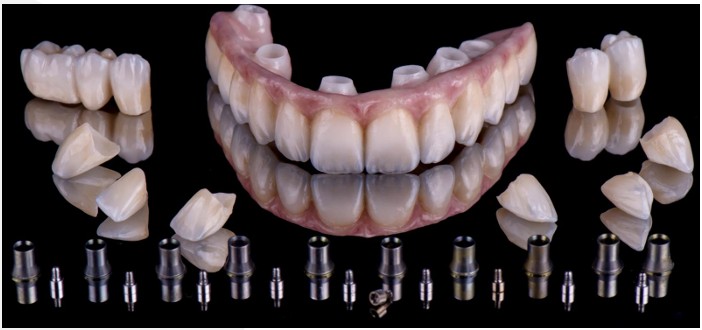
Nowadays, I mainly focus on implant prosthetics and, by doing that, I try to simplify things as much as possible. In cases of total edentulism, where the all-on-x concept (screw-retained bridge on multi-unit abutment) is applied — whether the bone or soft tissue management is in FP1, FP2 or FP3 manner — the materialisation is always zirconia reinforced with a titanium bar directly milled with a screw socket, without an intermediary coping.
All other materials have proven over time to be insufficiently stable for this type of work. It is also important to me that the joints of different components and materials are reduced to a minimum.
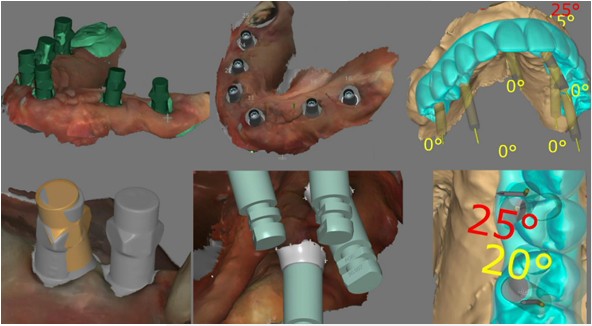
For smaller works, the focus is mainly on hybrid crowns and zirconia bridges. In such cases, I usually opt for an AngleBase abutment, which allows me to position the screw socket in non-aesthetic areas and not on the supporting cusps.
What has changed the most in implant prosthetics over the last 10–15 years?
In the past 10 to 15 years, the thing that has changed the most in implant prosthetics is the general approach considering the recent technical advances. The workflow mostly consists of prosthetically guided and digitally planned implantation with predictable prosthetic outcome.
Also, screw-retained work is more dominant in relation to work cemented in the mouth, which was the leader 15 years ago.
“In full-arch cases, I always rely on zirconia reinforced with a titanium bar — other materials have proven insufficient over time.”
2) Trends & workflow optimisation
Which trend is most reshaping lab work right now?
The development of digital software in combination with sophisticated CAM and printing machines that have extremely precise strategies — and the modern materials that accompany it all — are game changers in this business.
In a fully digital workflow, where do problems most often start?
In most cases, the problems are still in the compromise between compliance with the protocol and the use of proven materials in relation to shortening the production time and cutting costs for a more competitive price.
Ensuring the following of said protocol and using adequate materials shows no weak links among the digital aspects.
“Most problems come from compromising protocol and proven materials to shorten production time and cut costs.”
3) Precision & interface quality
What are your non-negotiables to ensure accuracy and passive fit at the implant–abutment interface?
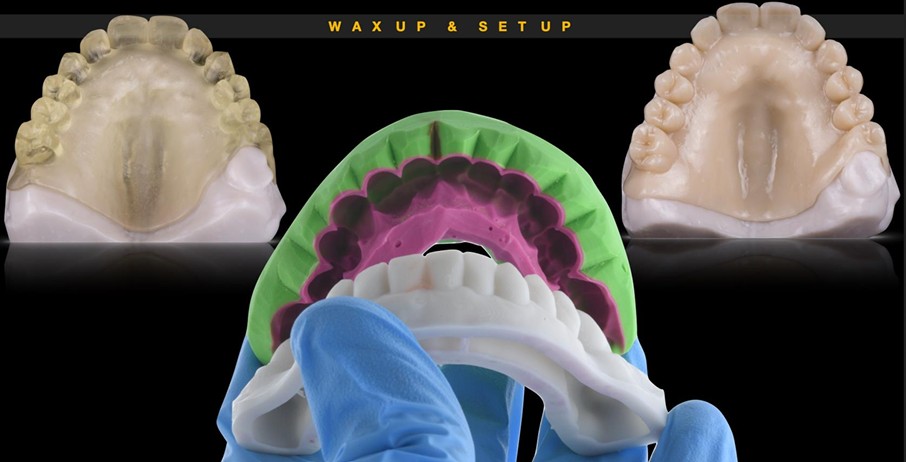
Adherence to protocol is primary. It is mandatory to check the digital model and the position of the implant with the help of a key, and a test of the design in the mouth from the try-in resin before definitive materialisation.
In complex rehabilitations, what details do clinicians often underestimate from a lab perspective?
Each phase of prosthetic work requires time and precise communication, varying from the type of restoration. Arrangements should be made that the technician is involved with decision making from the get-go.
4) Collaboration with clinicians
What information do you need from the clinic to deliver predictable outcomes consistently?
We need as much information as possible: photographs of the patient, face scan, vertical dimension, jaw relations recorded with a face bow and dynamic registrations preferably in digital form, etc.
Precise execution of each phase of work and good communication is crucial.
5) Experience with DESS®
What do you value most in a component supplier?
For me it’s all about honest cooperation — so, it has a bit of everything from the above. If I have to be explicit, I would have to say availability. I have come to value it most because of regional-specific problems — having no sufficient stock available of the specific products I am using.
Where do DESS® solutions support your workflow most?
I would say design flexibility is excellent, with vast libraries for various implant systems.
What single advice would you give to labs/technicians who want to increase predictability and reduce remakes?
I would advise them to always follow the protocol, check everything twice, develop a detailed plan and follow it through.
“The technician should be involved in decision-making from the get-go.”
At DESS®, we believe that precision, quality and collaboration with leading professionals are the foundation of predictable and long-lasting implant solutions. We thank Deni Pavlović for sharing his insights and experience with the DESS® community.
To see these principles applied in a real workflow, you can also explore Deni Pavlović’s clinical case featuring full-arch restorations: an upper arch restored with a prosthesis on implants using DESS® AngleBase® on Multiunits, and a lower arch restored with AngleBase® on implants. You can read the full case study here.
This interview is part of our DESS® KOL Interview Series, where clinicians and dental technicians share practical insights on precision, predictability and evolving workflows in implant dentistry. Stay tunned for the upcoming interviews!


-
Titanium in Implantology: A Scientific Perspective
 September 15, 2026
 -
Scan Bodies for Dental Implants: Common Errors That Affect Restoration Accuracy
 August 28, 2026
 -
Peri-Implant Soft Tissue and the Long-Term Success of Implant-Supported Restorations
August 21, 2026
-
Transepithelial abutments: DESS® solutions for screw-retained implant restorations
 July 29, 2026
 -
KOL Interview: Digital Workflows, Precision & Predictable Implant Restorations
 July 28, 2026